Almost nothing on a Chinese New Year table is there by taste alone. The reunion dinner is a menu of puns — dishes whose names sound like the thing you want more of in the coming year — and once you know the pattern, the whole meal reads differently.
Fourteen dishes, what each one means, and the handful of things deliberately kept off the table. For the date, the fifteen days and who else keeps the festival, see Lunar New Year.
The meanings run on puns
The mechanism is worth understanding once, because it explains the whole menu. Mandarin is full of homophones, and a dish earns its place when its name sounds like a wish.
Yú is both “fish” and “surplus”. Nián gāo is both “new year cake” and “year high”. Fā cài is a hair-like moss and also “get rich”. Nothing about the ingredient matters; the sound does.
The dishes
- Whole steamed fish (鱼, yú). The centerpiece, because “fish” sounds like “surplus” — nián nián yǒu yú, may you have a surplus every year. Served whole, head and tail on, because the year should be complete from start to finish. Some of it is left uneaten on purpose: the surplus has to carry into next year.
- Dumplings (饺子, jiǎozi). Shaped like the gold and silver ingots used as old currency, so the more you eat the more prosperous the year. Northern China’s essential dish, folded by the whole family on New Year’s Eve, sometimes with a coin hidden in one.
- Spring rolls (春卷). Fried to a gold-bar color and named for the Spring Festival itself. The wealth symbolism is the color, straightforwardly.
- Longevity noodles (长寿面). One continuous noodle, as long as possible. Never cut them, and do not bite through them mid-slurp — the length is the lifespan, which is the point of the dish.
- Nian gao (年糕). Sticky rice cake whose name means “year cake” and sounds like “year high” — a higher year, a promotion, a growing child. Steamed or pan-fried in slices.
- Tangyuan (汤圆). Sweet glutinous rice balls in syrup. Round, and the word sounds like tuányuán, reunion. Eaten especially on the fifteenth day at the Lantern Festival.
- Eight Treasure Rice Pudding. Glutinous rice with eight kinds of dried fruit, nuts and red bean paste. Eight is the luckiest number in Chinese numerology because bā sounds like fā, to prosper.
- Whole chicken. Whole again, for family completeness — served with head and feet, and often offered to the ancestors before anyone eats.
- Bao buns. Steamed and filled, soft and white. Everyday food raised to the occasion, and the easiest thing on this list to make with a group.
- Mandarin oranges and pomelo. Piled in bowls and given as gifts. Chéng for orange sounds like “success”; the gold color does the rest. Given in even numbers, never four.
- Lettuce (生菜, shēng cài). Sounds like “rising wealth”. Wrapped around other fillings, or fed to the lion in a lion dance and “spat out” over the crowd.
- Fat choy (发菜). A black hair-like moss, in a dish with dried oysters, because the name sounds like “get rich” — the fat choy in gung hay fat choy.
- Sweet dumplings and candied fruit on a tray of togetherness, an eight-compartment dish where each sweet stands for a different wish.
- Hot pot, for the very good reason that it keeps everybody at the table for hours, which is what the reunion dinner is actually for.
What is deliberately not served
- Porridge, which was the food of the poor — starting the year with it invites a poor year.
- Anything white, the color of mourning. Tofu in particular is avoided on New Year’s Day.
- A cut or broken dish — noodles cut short, a fish served in pieces, a broken plate. If something does break, the fix is to say suì suì píng ān immediately, a pun on “broken” and “peace year after year”.
- Pears, because lí sounds like “leaving” or “parting”. Sharing one with someone is worse than eating one alone.
- Anything in fours. Sì, four, sounds like sǐ, death. Gifts and oranges come in pairs, sixes or eights.
And one thing that is not Chinese at all
Fortune cookies. They are Japanese in origin, American in practice, and essentially unknown in China — a restaurant tradition of the United States rather than anything to do with the Spring Festival. Fun to make, and covered in their own post, but not a New Year dish.
Cooking these with a team
Dumplings and bao are the two that genuinely work as a group activity: repetitive, forgiving, and everybody ends up with something they folded. Noodles are the best story to tell over a table. Fish is the hardest to do well over video and the most impressive when it lands.
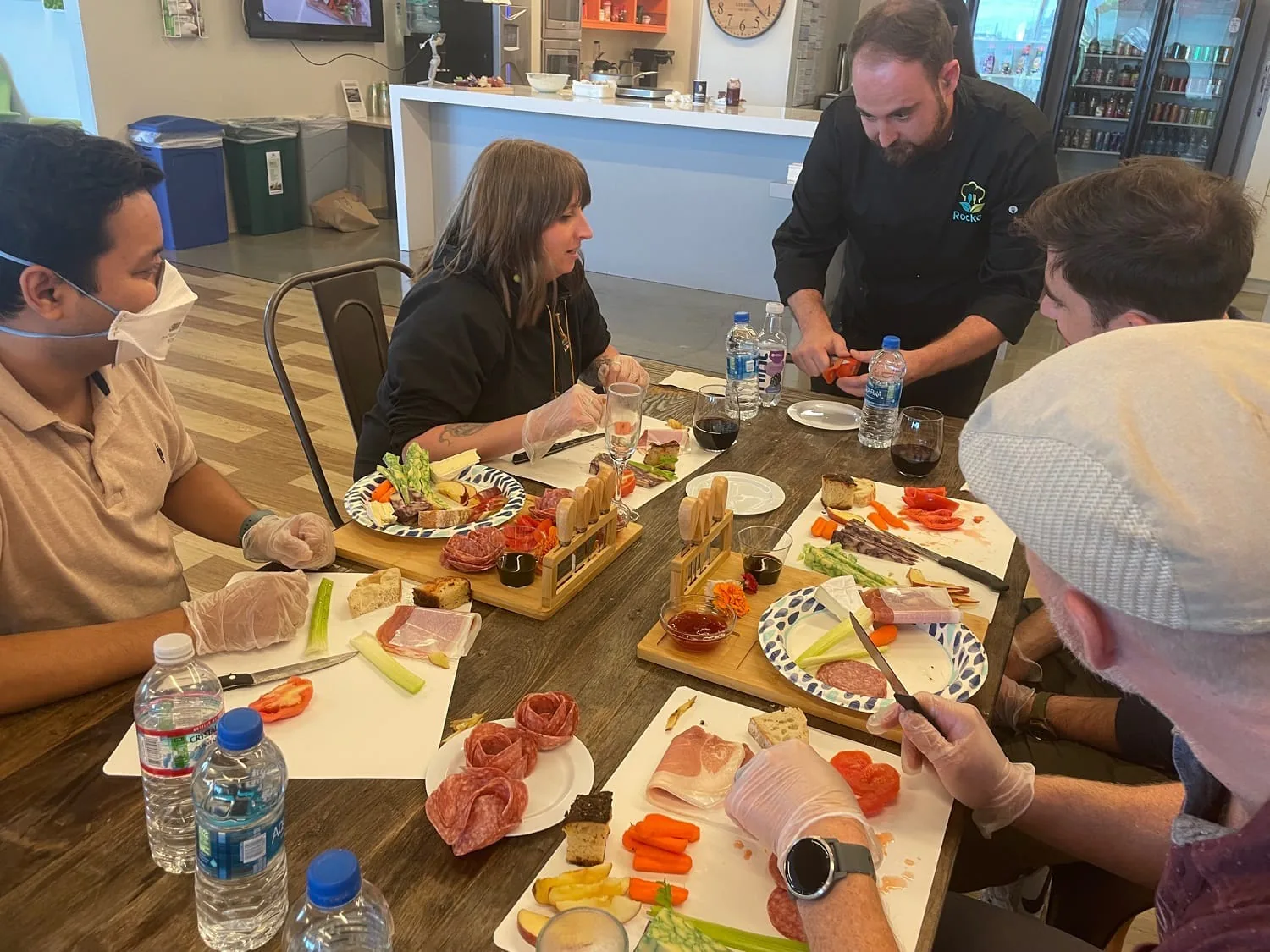
Rockoly’s Lunar New Year workshop runs Bao Buns — beef and scallion, 90 minutes, with gluten-free, vegetarian and vegan options — alongside Scallion Pancakes and Vegetable Gyoza. Worth knowing that the rest of that menu is pan-Asian rather than Lunar New Year specifically: it also carries sushi and okonomiyaki, which are Japanese, and Japan does not keep the lunar date. Book it for a good workshop rather than for an authentic Spring Festival menu, and pick the bao.
For the wider calendar, cultural and seasonal events lists the dates with a program behind them.