 Skip to content
Cinco de Mayo is not Mexican Independence Day. That is 16 September, and it is more than fifty years older than the event this day actually marks.
What 5 May commemorates is a single battle, in a single city — and that city happens to have the most celebrated regional cooking in Mexico. Which makes the menu question much easier to answer than most people realise, and considerably more interesting than a tray of nachos.
What the day actually marks
On 5 May 1862, an outnumbered Mexican force under General Ignacio Zaragoza defeated the French Imperial Army at Puebla — at the time one of the strongest armies in the world. The scale of it is the part worth knowing: Mexico lost fewer than 100 men of about 2,000. France lost roughly 500 of about 6,000.
It did not end the war. The French took Puebla the following year and held Mexico City until 1867. What it did was demonstrate, publicly, that the invasion was not going to be simple — which is why a single defensive victory is remembered rather than the campaign around it.
In Mexico it is a modest holiday. It is not a federal public holiday, and it is observed mainly in Puebla itself, largely with military reenactments and parades. The rest of the country treats it as a normal working day.
It is much bigger in the United States, where Mexican-American communities made it a civic and cultural celebration — it became a significant touchstone during the 1960s, and Congress formally recognised it in 2005. The very large commercial version arrived later, and is the reason so many people have it filed under the wrong holiday entirely.
Cook Pueblan food
Here is the useful consequence of the history. The day is about Puebla, and Pueblan cooking is the thing most Mexican chefs would name first if you asked which regional cuisine matters most.
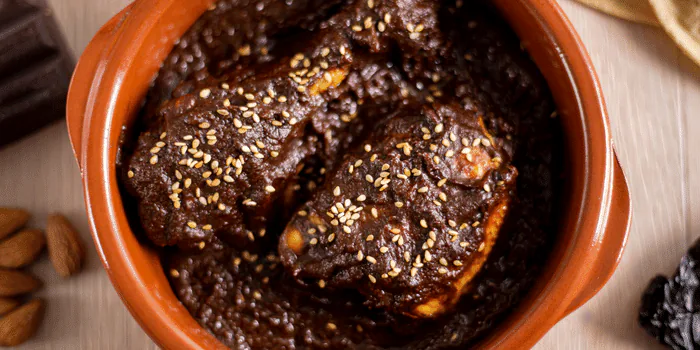
- Mole poblano. The dish of Puebla and the obvious centrepiece. Dozens of ingredients — several dried chiles, seeds, nuts, spices, a little chocolate. The chocolate is a seasoning, not a flavour to lead with; if it tastes like a dessert sauce, there is too much. Toast the chiles until fragrant and no further, because burnt chile is bitter all the way through and cannot be rescued.
- Pipián. The other Pueblan mole, built on toasted pumpkin seeds rather than chiles and chocolate. Green or red, much faster than mole poblano, and the one to make if you have an evening rather than a weekend. Blend the seeds while the stock is warm or the sauce turns grainy.
- Chiles en nogada. Poblano chiles stuffed with picadillo under a walnut cream, with pomegranate and parsley — green, white and red, the flag. Worth knowing that it is a late-summer dish, made when walnuts and pomegranates are in season around August and September, so it is the one Pueblan classic that is genuinely out of place on 5 May.
- Tinga poblana. Shredded chicken braised with tomato, onion and chipotle in adobo. Pueblan, straightforward, feeds a crowd from one pot, and it is the best filling on this list for a party.
- Cemitas. The Pueblan sandwich: a sesame-crusted roll, milanesa or carnitas, quesillo, avocado, chipotle, and papalo — a herb with no real substitute, so if you cannot find it, leave it out rather than swapping in cilantro and calling it the same thing.
The rest of the table
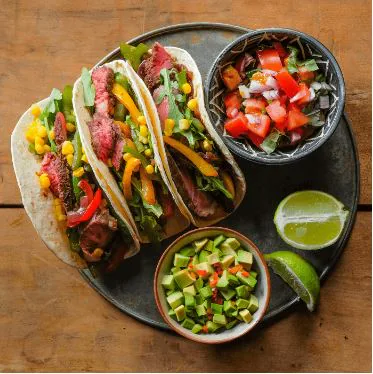
- Tacos al pastor. Pork marinated in chiles and achiote, cooked on a vertical spit with pineapple — an adaptation of the shawarma brought to Mexico by Lebanese immigrants, which is a better story than most menus tell. Without a trompo, a hot cast-iron pan and thin slices get you most of the way.
- Carnitas. Pork shoulder cooked slowly in its own fat, then crisped at the end. The crisping is not optional; carnitas that never hit high heat are just braised pork.
- Handmade corn tortillas. Masa harina, warm water, salt, a press, and a dry comal. Three flips: thirty seconds, a minute, then back for the puff. If they are stiff, the dough was too dry — it should feel like soft clay, not pastry.
- Guacamole. A molcajete or a fork, never a blender. Salt and lime go in at the end and to taste, because the avocados vary more than the recipe does.
- Two salsas, not one. Pico de gallo is raw — tomato, onion, chile, cilantro, lime. Salsa roja is cooked, usually with the tomatoes and chiles charred first. They do different jobs and a table with both is noticeably better than a table with either.
- Elote and esquites. Grilled corn with crema, cotija, chile and lime, on the cob or cut into a cup. The cup version is easier for a party and nobody has ever complained.
- Frijoles de la olla. Beans simmered with onion and a little lard or oil, and nothing else. The plainest thing on the table and often the best.
- Churros. Cinnamon and sugar, eaten within about ten minutes of frying and not a moment later.
- Flan or tres leches, whichever you can make ahead — both improve overnight, which is the entire reason to choose them.
Drinks
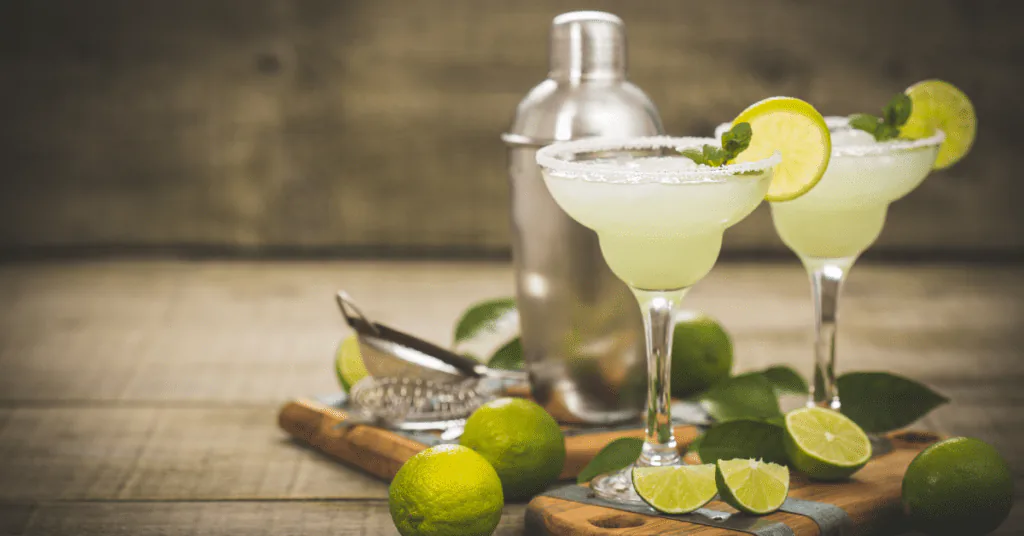
- A margarita is three things: tequila, lime juice, orange liqueur. Fresh lime, no sour mix. Salt half the rim so the drinker can choose.
- The paloma — tequila, grapefruit soda, lime, salt — is what people actually drink in Mexico, and it is easier to make well for a crowd.
- Aguas frescas carry the day for anyone not drinking: jamaica (hibiscus, tart and deep red), horchata (rice and cinnamon), tamarindo. These are not a consolation option, they are what is on the table.
- Mexican hot chocolate if the evening runs long — whisked with a molinillo, cinnamon, and a fraction of the sugar of the American version.
Doing it properly
The day has a well-earned reputation as an excuse, and it is worth deciding not to run that version.
- Skip the costume. A sombrero, a poncho and a stick-on moustache is a caricature of a nationality, and it is the same move that gets caught instantly when it is aimed at anyone else — see the equivalent problem on St Patrick’s Day.
- Do not make it only about drinking. The food is the interesting part and the aguas frescas are genuinely good, so there is no reason for the table to exclude anyone.
- Get the history right in one sentence if you say anything at all. “It marks a battle at Puebla in 1862, and it is not Independence Day” is enough, and it is more than most events manage.
- Cook something specific rather than generically Tex-Mex. The difference between a nacho platter and a pot of tinga is one afternoon and an entirely different evening.
If you want a chef to run it
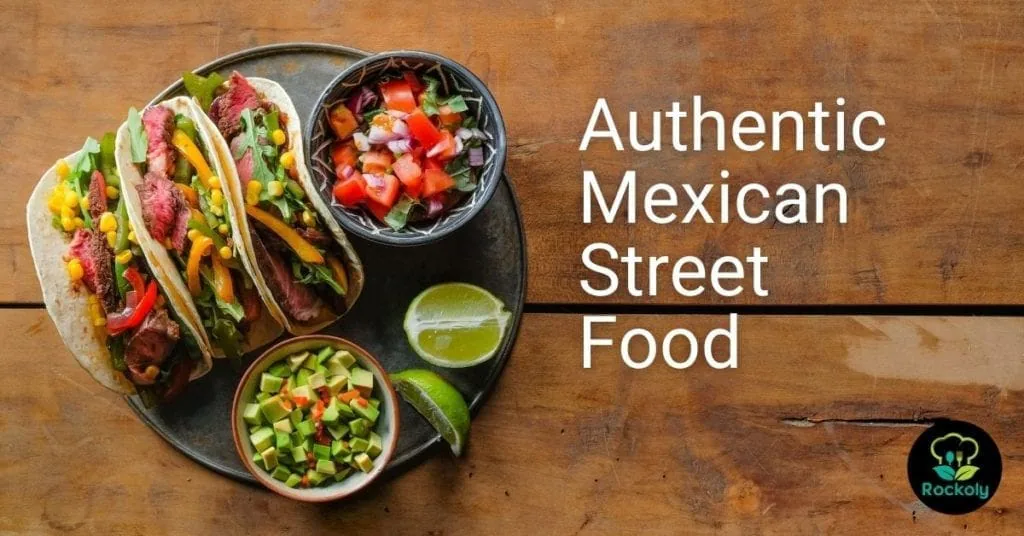
The Cinco de Mayo cooking workshops run three, all live with a chef and ingredients delivered:
- Mexican Street Tacos with chicken and pico de gallo — 60 minutes, gluten-free, with vegetarian and vegan versions.
- Pipian Mole — pumpkin seed mole over seared chicken, 60 minutes, gluten-free, with vegetarian and vegan versions. This is the Pueblan one, and the pipián post goes further into the sauce.
- Churros in cinnamon and sugar — 60 minutes, vegetarian, with gluten-free and vegan options.
Two of the three are on the list above, and the mole is the dish the day is actually about. For more of the same cooking outside of May, the Mexican cooking classes and taco making posts cover it, and Hispanic Heritage Month is the other date on this calendar worth planning for properly.