 Skip to content
Oktoberfest is mostly in September. That is the first thing worth knowing about it, and the reason a party planned for late October is planned for after it has finished.
In 2026 it runs from Saturday 19 September to Sunday 4 October — the 191st, on the Theresienwiese in Munich. The rule behind the dates is fixed and worth keeping: it opens on the Saturday after 15 September and closes on the first Sunday in October. So it moves a little each year, and only the last few days ever fall in the month it is named after.
It is also not, strictly, a beer festival. It is a Volksfest — a fair, with rides, brass bands and an enormous amount of roast chicken — that began in 1810 as the public celebration of a royal wedding and never stopped.
The beer, and the rule that limits it
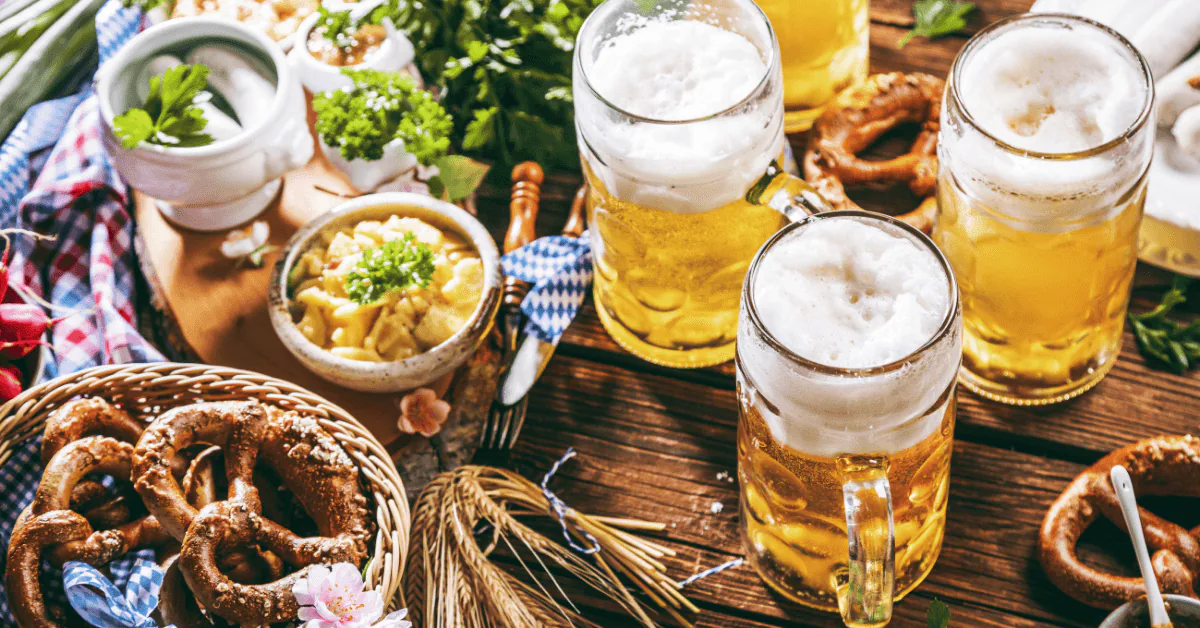
Only six breweries may serve at Oktoberfest, and the qualification is geographic rather than commercial: the beer must be brewed within Munich’s city limits and must conform to the Reinheitsgebot, the purity law that restricts it to water, barley, hops and yeast. That is Augustiner, Hacker-Pschorr, Hofbräu, Löwenbräu, Paulaner and Spaten, and nobody else.
What they pour is Festbier — a shade stronger than everyday lager, around 6%, gold rather than the darker amber the old Märzen style suggests. It arrives in a one-litre Maß, which is the detail most people underestimate: a stein is two pints, and they are not sipped.
The food
Fourteen things, with what actually makes each one work.
- Brezn. The Oktoberfest pretzel is dipped in a food-grade lye solution before baking — that is what makes the skin mahogany and gives the flavour nothing else replicates. A baking-soda bath is the safe home substitute and it is genuinely not the same; boil the soda on a tray in the oven first to strengthen it.
- Obatzda. Ripe camembert mashed with butter, sweet paprika, a little beer and finely chopped onion, left an hour for the onion to soften. The cheese must be properly ripe — firm camembert makes a paste that tastes of nothing.
- Hendl. Roast half-chicken, and by volume the single biggest seller on the field. Brined, then basted with parsley butter. It is the least fussy thing here and the most eaten.
- Schweinshaxe. Roast pork knuckle with crackling you can hear across a table. Score the skin, salt it hard, and give it a blast of high heat at the end rather than the beginning.
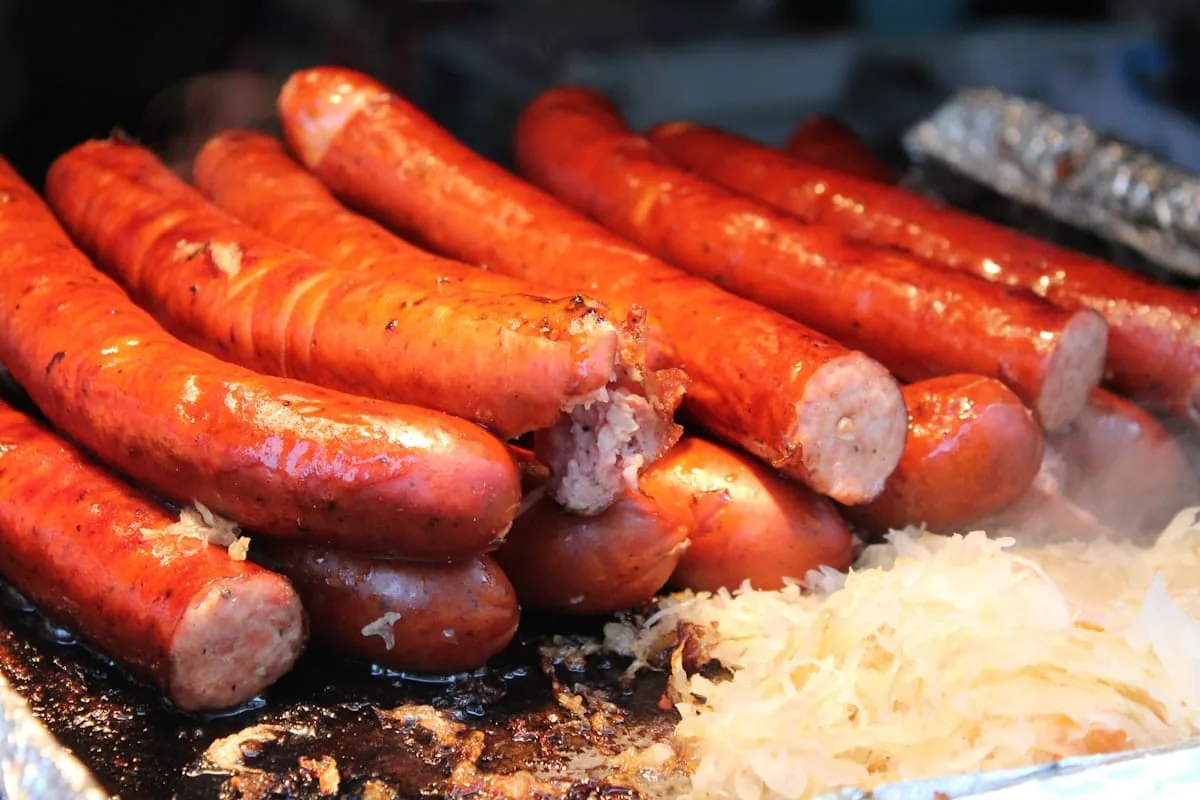
- Weisswurst, with the one rule everybody quotes: it should never hear the midday bells. Made fresh without preservatives, it was historically a morning food and is still eaten before noon. You zuzeln it — suck the sausage from its skin — or cut it lengthways and peel. The skin is not eaten, and the mustard is the sweet one, never Dijon.
- Schnitzel. Worth being precise: Wiener Schnitzel is veal, and the name is legally protected. The pork version everyone actually eats is a Schnitzel Wiener Art. Either way, fry in enough fat that it swims, and swirl the pan so the crumb puffs away from the meat.
- Käsespätzle. Fresh egg noodles layered with Emmental and buried under onions fried almost black. The vegetarian anchor of any German table, and better than it sounds.
- Bavarian Kartoffelsalat. No mayonnaise. Warm potatoes dressed with hot stock, vinegar, mustard and oil, left to absorb. The northern German mayonnaise version is a different dish and an argument in its own right.
- Blaukraut. Red cabbage braised with apple, vinegar and cloves. The vinegar is structural, not seasoning — without acid it turns an unappetising blue, which is how it got the other half of its name.
- Sauerkraut, cooked rather than served raw from the jar: simmered with stock, juniper and a little bacon until it stops being sharp.
- Radi. A white radish cut in one continuous spiral, salted, and left until it weeps. Salted radish and strong beer is the oldest pairing on the field.
- Steckerlfisch. Whole mackerel on a stick, brushed with garlic oil and grilled over charcoal. The one Oktoberfest dish nobody expects and everybody finishes.
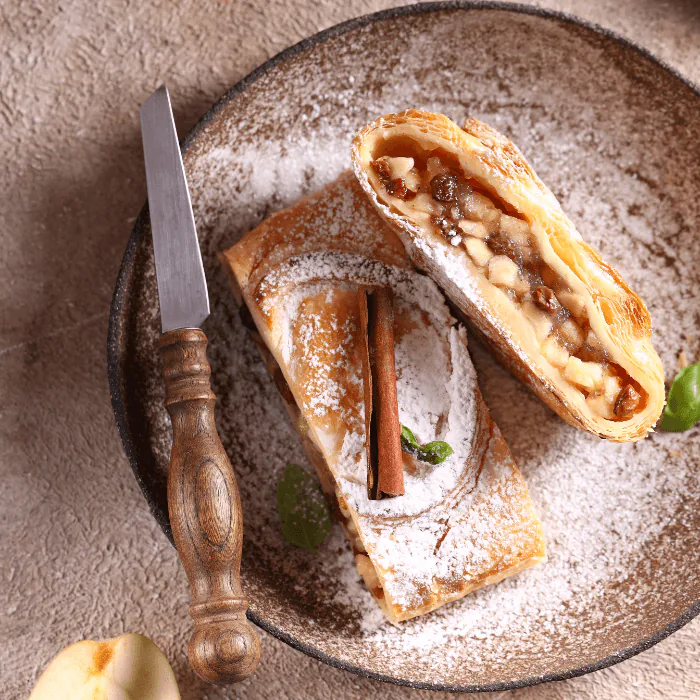
- Apfelstrudel. The dough is stretched — not rolled — until you can read print through it. Work it on a floured cloth and use the cloth to roll it up; hands alone will tear it every time.
- Kaiserschmarrn. A thick pancake torn into pieces in the pan, caramelised in butter and sugar, served with plum compote. The tearing is the recipe, not a mistake.
And one thing that is not food: the Lebkuchenherz, the iced gingerbread heart on a ribbon. It is a souvenir, worn round the neck all day and rarely eaten, which is just as well after a day in the sun.
Doing it at work
Oktoberfest is the workplace theme most likely to collapse into a drinking event, and worth deciding about deliberately.
- The food carries it perfectly well. Pretzels, obatzda and a pot of käsespätzle is a genuinely good spread and asks nothing of anyone who does not drink.
- If there is beer, make the alternative real. Apfelschorle — apple juice and sparkling water — is what half of Bavaria actually drinks with lunch, and it belongs on the table as a choice rather than a consolation.
- Skip the costumes. Dirndl and lederhosen are regional dress that people in Bavaria genuinely wear; a cheap novelty version handed round an office is the same move as a sombrero on Cinco de Mayo or a leprechaun hat on St Patrick’s Day.
- Get the dates right. An “Oktoberfest party” in the last week of October is a party after the festival has packed up. Mid-to-late September is the real window.
If you want a chef to run it
Rockoly’s Oktoberfest workshops run three, live with a chef and the ingredients delivered:
- Pretzels with Pub Cheese — 60 minutes, vegetarian, with gluten-free and vegan options. This is the brezn-and-obatzda pairing above, and the easiest of the three to run with a mixed group.
- German Schnitzel — 60 minutes, with gluten-free, vegetarian and vegan versions.
- Apple Strudel — 90 minutes, vegetarian, with gluten-free and vegan options. The longest of the three, because stretching the dough is the lesson.
Three of the fourteen dishes above, which is a fair hit rate for a themed menu, and the strudel is the one genuinely worth being taught rather than read.
For the rest of the calendar, cultural and seasonal events lists the dates that have a programme behind them — and Oktoberfest is one of the few where the window is narrow enough that booking late means booking for next year.