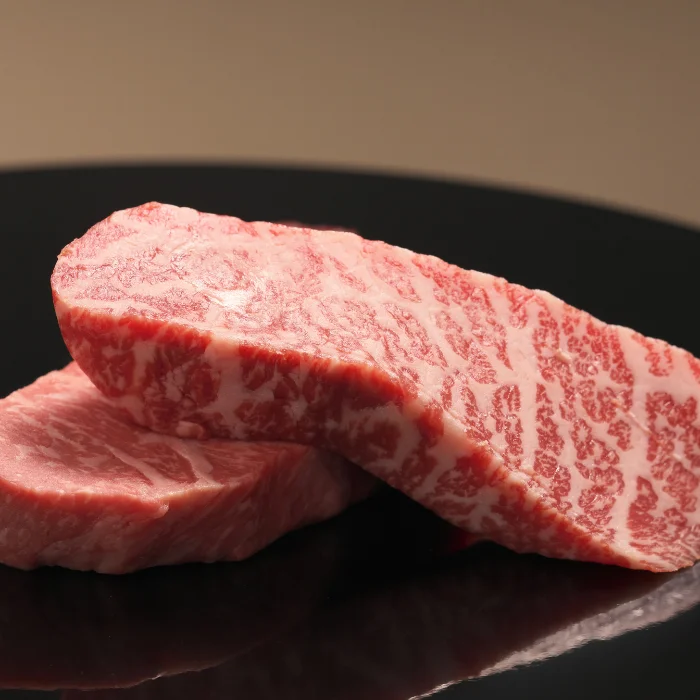
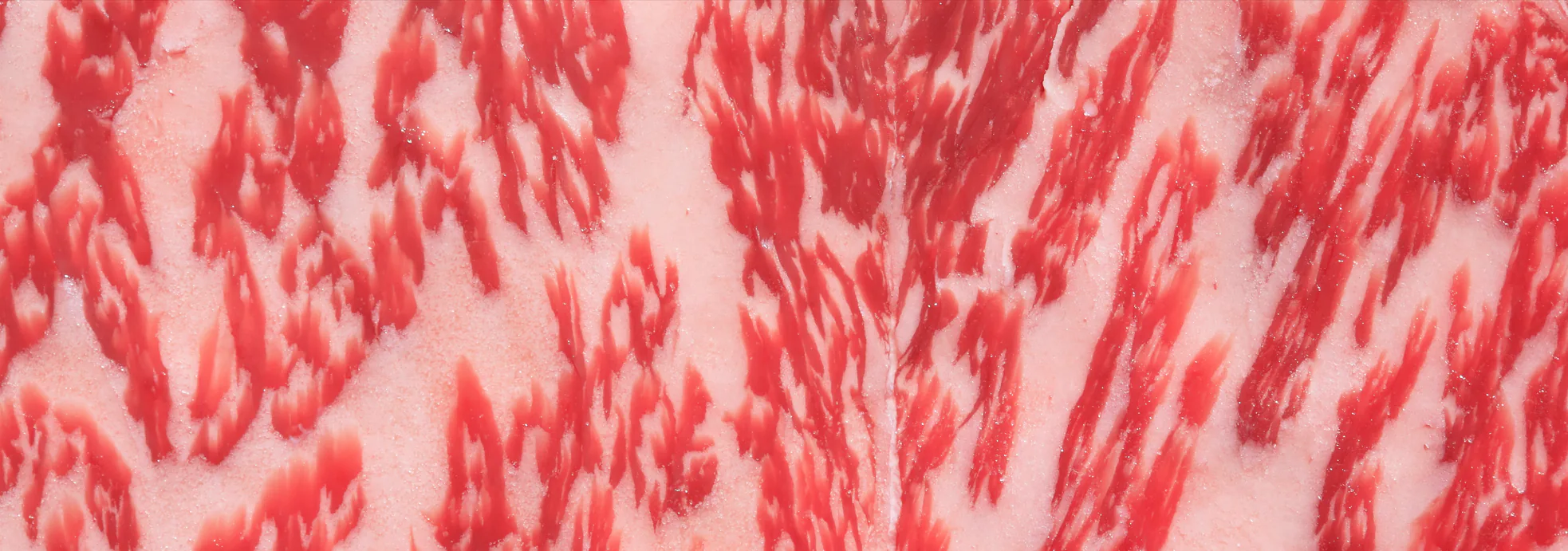
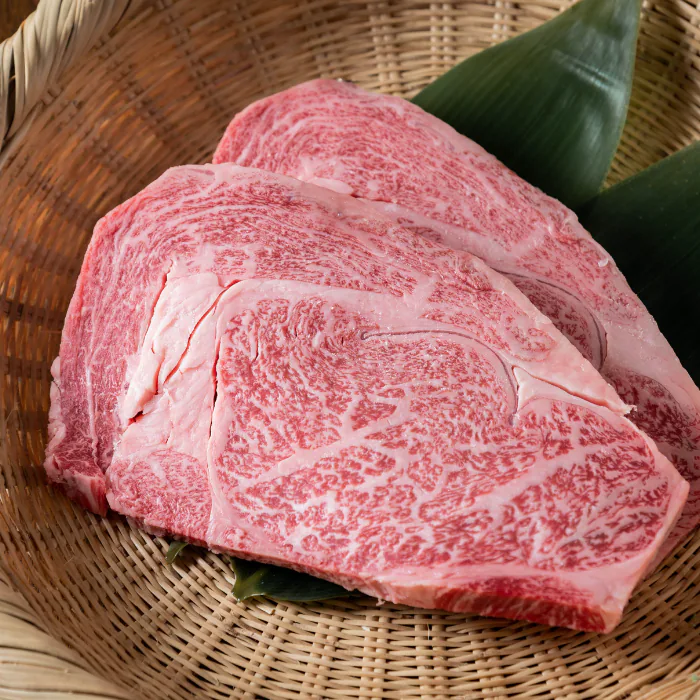
Wagyu means Japanese cattle - wa for Japanese, gyu for cow. What sets it apart is intramuscular fat: fine threads of marbling laced through the muscle itself instead of sitting in a rim around the edge. That fat has a much lower melting point than ordinary beef fat, low enough that it begins to soften below body temperature, which is why a slice of Wagyu turns silky on the tongue rather than chewy.
There are four Wagyu breeds: Japanese Black (Kuroge), Japanese Brown (Akage), Japanese Shorthorn (Nihon Tankaku) and Japanese Polled (Mukaku). Japanese Black is by far the most common and the source of the most sought-after beef.
Japanese beef is graded twice by the Japanese Meat Grading Association. A letter from A to C rates yield, and a number from 1 to 5 rates quality - marbling, meat color, firmness and fat color. A5 is the top of both scales. Marbling itself is scored separately on the Beef Marbling Standard, a 1 to 12 scale, and a quality grade of 5 requires a marbling score of 8 or higher.
Outside Japan, Wagyu cattle are crossbred with breeds like Angus to produce American or Australian Wagyu. Those cuts are far more marbled than conventional beef, but they are a different animal from full-blood Japanese Wagyu, which is exactly what makes tasting them side by side interesting.
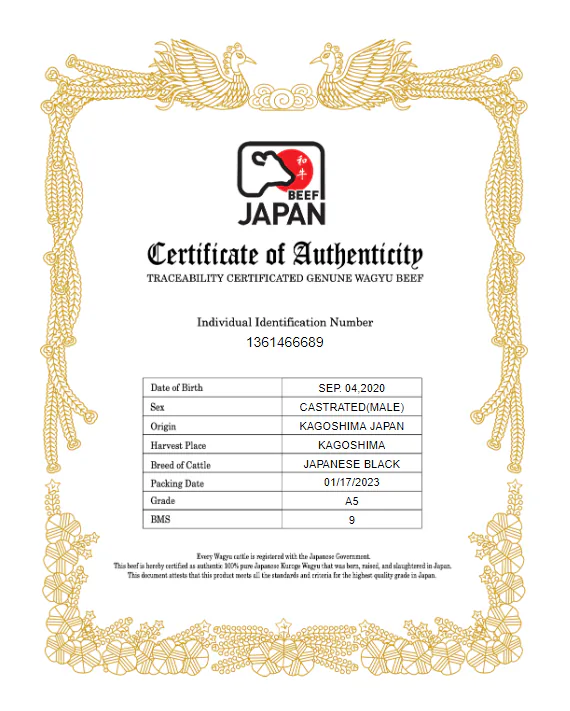
Every Rockoly Wagyu participant receives a certificate of authenticity tracing the origin of their cut.
 Skip to content













































 Live
Live