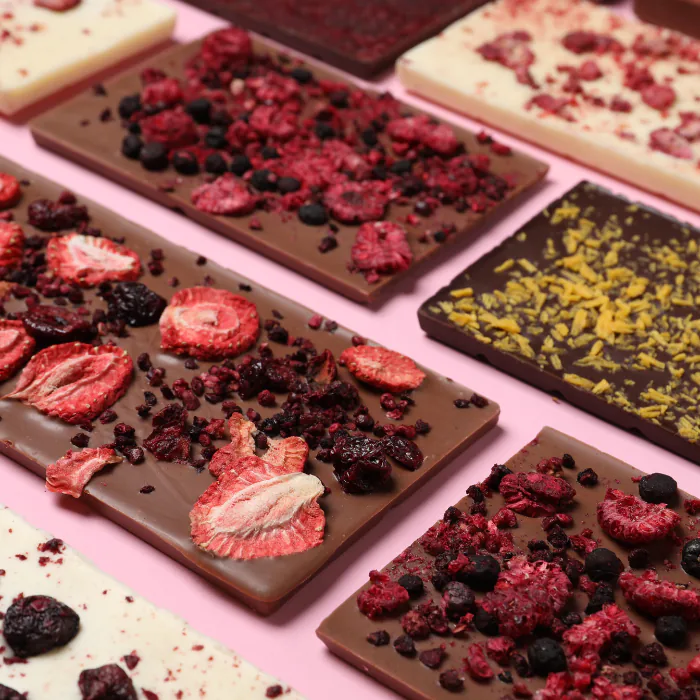
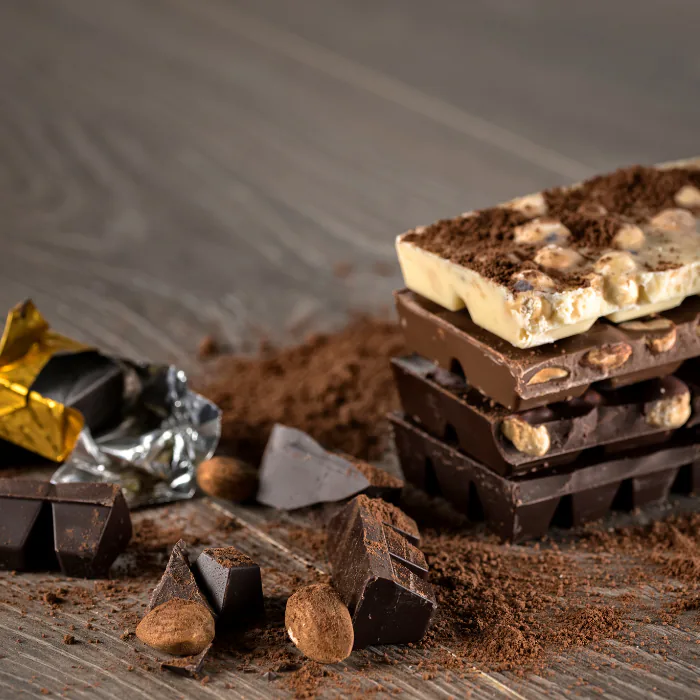
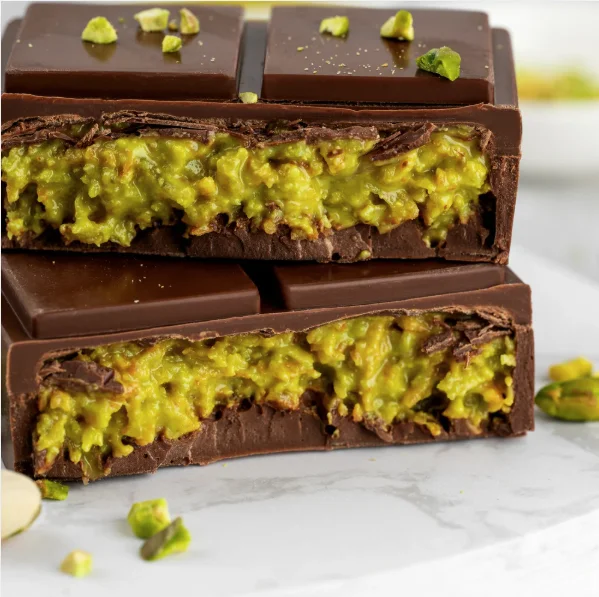
Look, snap, smell, then let it melt. Whatever you do, don't chew.
-
Look at it. Well-made chocolate is glossy and evenly colored. Dull gray streaks mean the cocoa butter has bloomed and the bar was stored badly.
-
Snap it. A clean, sharp crack is the sound of good temper. A soft, bendy, waxy break means the cocoa butter crystals set the wrong way.
-
Smell it before it goes anywhere near your tongue. A surprising share of what you will call flavor is actually aroma.
-
Put a piece on your tongue and leave it alone. The first note is usually sweetness or acidity, and the interesting part - fruit, nuts, tobacco, earth - arrives in the finish. Chewing skips straight past it.
That snap is not decoration. Cocoa butter can crystallize into several different forms, and only one of them sets hard, glossy and stable; coaxing it into that form is called tempering, and it is the fiddliest job in a chocolate kitchen. It is also why chocolate melts in your mouth and almost nowhere else, because cocoa butter melts just below human body temperature. Your chocolatier covers how each bar was made before you taste it, so the snap tells you something.
And the percentage on the wrapper?
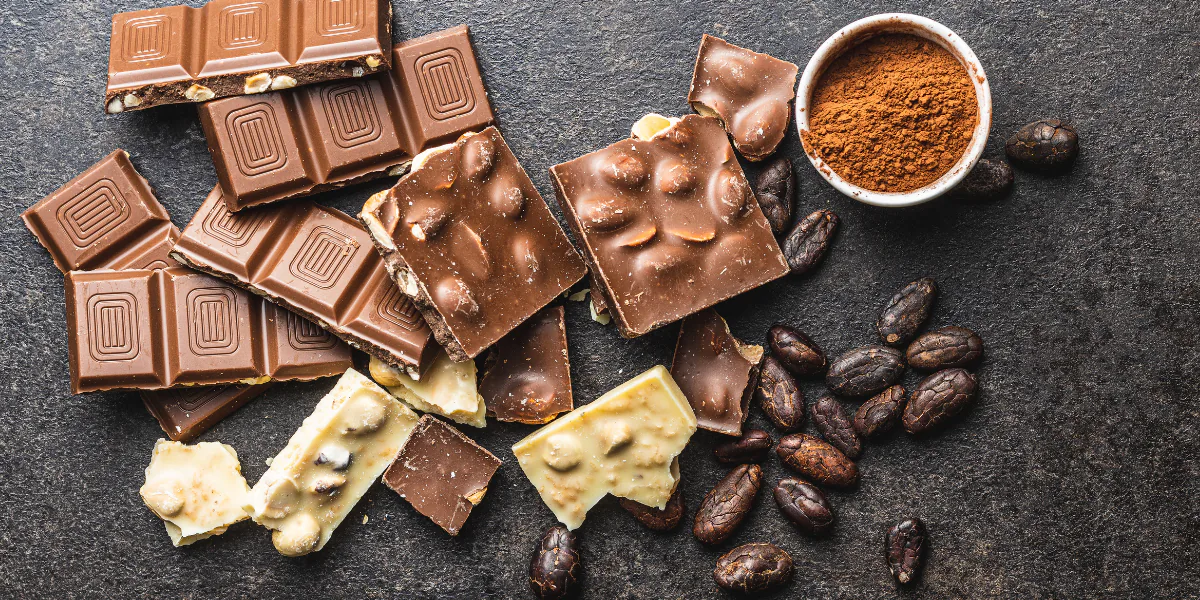
That is the share of the bar, by weight, that came from the cacao bean - cocoa solids plus cocoa butter. A 70% bar is 70% bean and roughly 30% sugar and other ingredients. It is not a quality score. A 90% bar made from harsh, poorly fermented beans is unpleasant, while a 65% bar from good beans can be extraordinary, so the number tells you how sweet a bar is rather than how good it is; origin, fermentation and roast do that. White chocolate proves the point from the other direction, since it contains cocoa butter but no cocoa solids at all, which is why purists argue about whether it counts. The Craft Makers Select menu is where this gets fun, because bars from different origins sitting at similar percentages can taste nothing alike.













































 Live
Live