

An office cookie exchange is the cheapest good idea of the December calendar. Everyone bakes one kind of cookie at home, brings a batch in, and goes home with a box of everybody else’s. It takes an hour of a Friday afternoon, nobody has to buy a gift, and the people who never talk in meetings turn out to have a grandmother’s recipe they are quietly proud of.
It also goes wrong in predictable ways: thirty people bring chocolate chip, someone with a nut allergy cannot eat half the table, the remote half of the team watches it happen on a screen, and the organizer ends up washing plates. This page is the kit for avoiding all of that. It has rules you can paste into the invitation, the quantity math, a three-week timeline, a sign-up sheet, an allergen card, thirty cookies that survive a commute, and three ways to include people who are not in the room.
- The rules to paste into the invitation
- How many cookies each person bakes
- The timeline: three weeks to the swap
- The sign-up sheet
- The allergen card
- Cookies 1 to 10: Sturdy classics
- Cookies 11 to 20: Spiced and festive
- Cookies 21 to 30: From around the world
- Cookies to leave at home
- Voting categories and small prizes
- Remote and hybrid teams: three ways to include them
- Bake together live instead
The rules to paste into the invitation
Copy these, change the numbers to suit your team, and send them with the sign-up link.
- One kind of cookie per person. Bake one recipe, in one batch, and bring all of it.
- Bring a dozen for every person swapping, plus a dozen for the tasting plate. If ten people sign up, that is eleven dozen. Section two below has a smaller version for big teams.
- Homemade, or say so. Store-bought is welcome from anyone who cannot bake this year. Put it on the sign-up sheet so nobody is surprised.
- Claim your cookie on the sheet first. First to sign up gets the recipe. If chocolate chip is taken, pick something else.
- Label it. Every batch comes with the allergen card filled in. No card, no table.
- Bring the recipe. A printed card or a link in the chat, so people can make the ones they loved.
- Bring a container to take cookies home in. A tin, a box or a zip bag. The organizer is not supplying them.
- Arrive with your cookies plated or boxed by 2:30. The swap starts at 3:00 and is done by 4:00.
- Taste first, then fill your box. Everyone takes an equal share of each batch. The tasting plate is for trying, not for filling.
- Leftovers go somewhere useful. Whatever is left at 4:00 goes to the front desk, the night shift or the building staff.
Rule ten is the one people remember. A cookie exchange that ends with a box for the cleaners and the security desk says more about the team than any card.
How many cookies each person bakes
The classic rule, a dozen for every participant, is right for a team of six to twelve. Above that it stops being fun: a swap of twenty-five people would ask each baker for twenty-five dozen cookies, which is a weekend of baking.
- Up to 12 people: a dozen per participant, plus one dozen for tasting.
- 13 to 24 people: half a dozen per participant, plus one dozen for tasting. Everyone still takes home a box of roughly 80 to 145 cookies.
- 25 people and over: split into swap groups of ten to twelve, each with its own table, and give the whole room one shared tasting table where every baker puts out a dozen.
Two smaller numbers help. Ask everyone to bake two or three extra to cover breakage on the way in, and set a size: cookies about the size of a palm, not dinner-plate cookies that fill a box on their own.
The timeline: three weeks to the swap
In 2026, National Cookie Day falls on Friday, December 4, which makes it a natural date for the swap, and early enough that it does not collide with the holiday party. Any Friday in the first half of December works.
- Three weeks out: pick the date and room, book an hour and a half, and send the invitation with the rules and the sign-up link.
- Two weeks out: close sign-ups. Post the list of cookies so far, so late joiners can avoid duplicates. Ask anyone with an allergy to tell you privately.
- One week out: send the quantity reminder (“bring nine dozen, we have eight swappers”), the allergen card and the voting categories.
- Two days out: remind people to bake. Most cookies on the list below keep well for several days in an airtight tin, so the weekend before is fine.
- The day: set out tables, the tasting plate, napkins, a roll of labels, two serving tongs per table and hand sanitizer. Remote viewers get a camera on the table.
- The next morning: post the recipes in one shared document and announce the winners.
The sign-up sheet
Make it a shared spreadsheet or a form. These are the columns, in this order:
- Name
- Cookie (the name people will see on the table)
- Homemade or store-bought
- Contains (tick any of the nine major allergens on the card below)
- Made in a kitchen with nuts? (yes, no, not sure)
- Coming in person or remote
- Want to be judged? (some people bake for the joy of it and do not want a vote)
- Recipe link (optional, filled in after the swap)
The “made in a kitchen with nuts” column matters more than it looks. A sugar cookie baked beside a tray of pecan sandies is not a safe sugar cookie for someone with a tree nut allergy, and only the baker knows.
The allergen card
Print one card per batch, or ask bakers to write it on the lid. United States food labeling law names nine major food allergens. Sesame became the ninth on January 1, 2023, under the FASTER Act, joining the eight set in 2004. The card lists all nine so the baker ticks rather than remembers.
- Cookie name and baker
- Contains: milk, eggs, wheat, soy, peanuts, tree nuts, sesame, fish, crustacean shellfish
- Also contains: (anything else worth saying, such as coconut or alcohol)
- Baked in a kitchen with peanuts or tree nuts: yes or no
- Gluten-free, vegan or neither
Then do one more thing as the organizer. Put any batch that is free of the nine on its own plate at one end of the table, with its own tongs, before anyone starts picking. People with allergies should get first pick, not leftovers.
Cookies 1 to 10: Sturdy classics
The best swap cookies share three traits: they hold their shape in a box, they taste as good on day three as day one, and they do not need the refrigerator. Every cookie below passes. Use the list to fill gaps on the sign-up sheet, so the table ends up with a spread of flavors instead of eight kinds of chocolate.
- Chocolate chip cookies. Let one person claim it early, so nobody else brings it.
- Oatmeal raisin cookies. Chewy, keeps well, and the raisin skeptics will be loud about it.
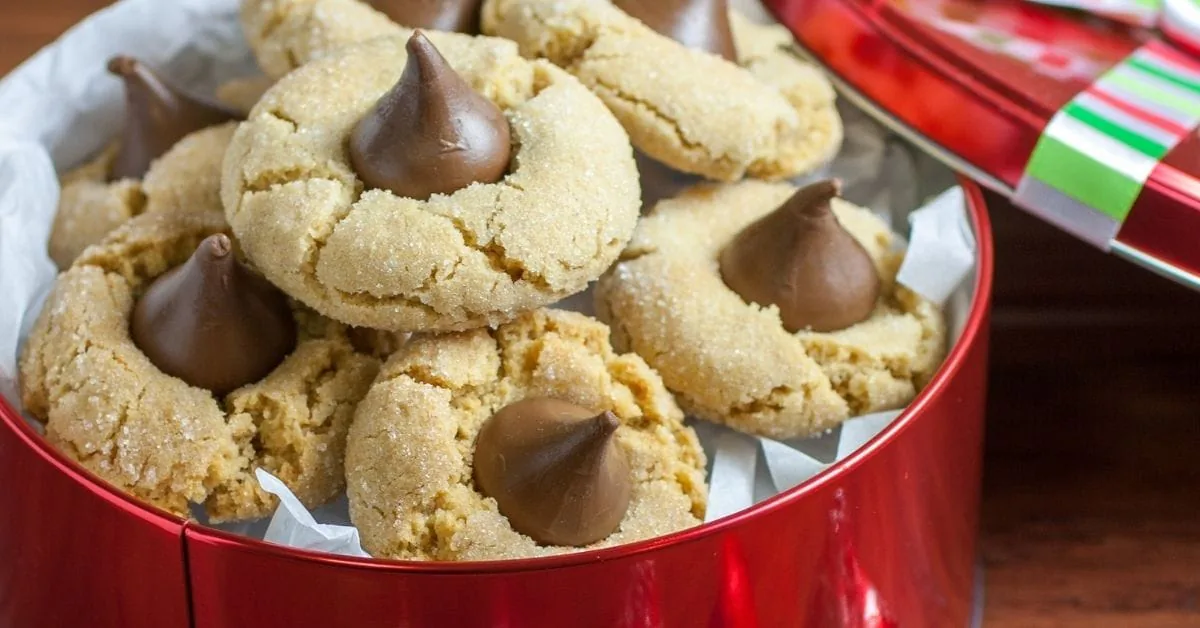
- Peanut butter blossoms. A peanut butter cookie with a chocolate kiss pressed in. Label it clearly.
- Snickerdoodles. Rolled in cinnamon sugar, soft, and almost impossible to break in transit.
- Shortbread. Butter, sugar, flour. Cut it into fingers or stars.
- Sugar cookies with sanding sugar. Colored sugar instead of icing, so nothing smears.
- Chocolate crinkle cookies. Rolled in powdered sugar so they crack in the oven.
- Double chocolate cookies. For the person who thinks chocolate chip is too restrained.
- Molasses cookies. Soft, dark, and the best of the lot after a few days in the tin.
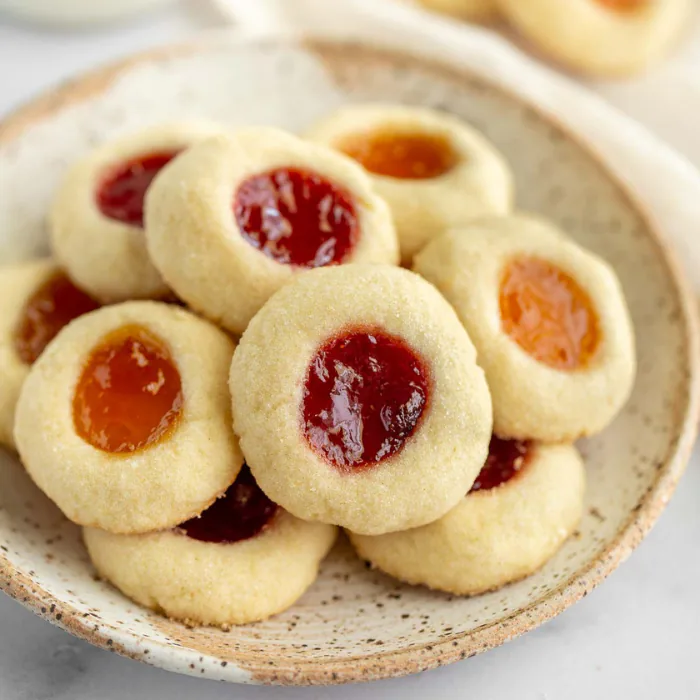
- Thumbprint cookies. Shortbread with a well of jam in the middle. Use a thick preserve so it sets.
Cookies 11 to 20: Spiced and festive
- Gingerbread cookies. Cut into people or stars and pipe them with royal icing that sets hard.
- Gingersnaps. Crisp and sharp, and they keep for over a week.
- Cardamom thumbprints. Thumbprints with cardamom in the dough and apricot or raspberry preserves in the middle.
- Cranberry orange biscotti. Twice-baked, so they are the toughest cookie on the table and the best to gift.
- Peppermint bark cookies. A chocolate cookie with a set layer of white chocolate and crushed candy cane.
- Eggnog snickerdoodles. A snickerdoodle with nutmeg in the dough.
- Chai sugar cookies. Cinnamon, cardamom, ginger and clove in a plain sugar cookie.
- Cranberry white chocolate oat cookies. Red and white on the plate, chewy in the middle.
- Pinwheel cookies. Two doughs rolled together and sliced. They look like a lot of work and are not.
- Hot chocolate cookies. A chocolate cookie with a marshmallow pressed into the top in the last minutes of baking.
Cookies 21 to 30: From around the world
A cookie exchange is the easiest way to learn where your colleagues’ families come from. Invite people to bring the cookie they grew up with, and use this list as a starting point for anyone who wants to try someone else’s tradition.
- Linzer cookies (Austria). Two rounds of nut dough sandwiched with red jam, the top one cut out to show it.
- Pfeffernüsse (Germany). Small spiced cookies with a white sugar glaze.
- Zimtsterne (Germany and Switzerland). Cinnamon stars made with ground almonds and a meringue top. Naturally flourless, and full of tree nuts.
- Speculaas (the Netherlands and Belgium). Thin, crisp spiced cookies, often pressed into a wooden mold.
- Alfajores (Argentina, Peru and beyond). Two tender cornstarch cookies with dulce de leche between them.
- Polvorones, or Mexican wedding cookies. Crumbly butter balls rolled in powdered sugar.
- Biscochitos (New Mexico). Anise and cinnamon cookies, and the official state cookie of New Mexico.
- Melomakarona (Greece). Orange and olive oil cookies soaked in honey syrup and topped with walnuts.
- Nankhatai (India). Cardamom shortbread with a crackled top, sometimes topped with a pistachio.
- Rugelach (Central and Eastern Europe). Rolled cream cheese pastry filled with jam, nuts or chocolate. Bake them firm so they travel.
Cookies to leave at home
Some excellent cookies are bad swap cookies. Steer people away from these on the sign-up sheet, kindly:
- Anything that needs the refrigerator. Cheesecake bars, cream-filled cookies and anything with whipped cream will sit at room temperature for hours.
- Soft buttercream frosting. It smears onto every other cookie in the box. Royal icing that sets hard, or sanding sugar, does the same job.
- Very thin, lacy cookies. Florentines and tuiles are beautiful and arrive as crumbs.
- Cookies with alcohol in the finished product. Rum balls and bourbon balls are a tradition in some families, but a work table has people who do not drink, people who are driving, and sometimes people under 21. If someone brings them, they get their own labeled plate.
- Giant cookies. One six-inch cookie cannot be split twelve ways.
Voting categories and small prizes
Voting is optional. Some teams love it and some find it spoils the point. If you vote, vote on categories so more than one person wins, and keep the “want to be judged?” column honored.
- Best in show. The one everyone went back for.
- Best family recipe. The baker tells the story in one sentence.
- Best looking. Usually the gingerbread.
- Most adventurous. A flavor nobody had tried before.
- Best store-bought. For the person who was honest about it. This one gets the biggest laugh.
Voting works best on paper slips or a quick form, closed fifteen minutes before the end. Prizes can be small: a good cookie cutter, a tin, a wooden spoon with the year written on it, or bragging rights in the team channel until next December. If you are also running an awards ceremony, the cookie winners fit straight into the year-end office awards.
Remote and hybrid teams: three ways to include them
A cookie exchange is built on physical cookies changing hands, so a remote team has to choose what to keep.
- Swap by mail. Each remote person is paired with one or two colleagues and posts them a box. It works for small teams and is lovely to receive, but it costs every baker postage, depends on the weather and the carrier, and only suits the sturdiest cookies on the list, such as biscotti, shortbread and gingersnaps. Pack them tightly in a tin, cushioned with parchment, and send early in the week so they do not sit in a depot over a weekend.
- Swap recipes, bake at home, show and tell. Everyone bakes their own cookie at home, then joins a thirty-minute call to show the batch, tell the story behind it, and vote. The recipes go into one shared document that becomes the team’s cookbook. Nobody tastes anyone else’s, which is the cost.
- Bake the same cookie together. Everyone bakes the same recipe at the same time on one call, from the same ingredients, so the whole team ends with a matching batch and can compare results on camera. This is the version that feels most like a party, and it is the one Rockoly runs.
For the hybrid case, use both: the office keeps its table, and the people at home join by video for the voting, with their own cookies counted in it. Turn on the camera over the table, and read the winners out on the call, not only in the room.
Bake together live instead
On Rockoly’s holiday specials, a live chef bakes with the whole team on one call, and the ingredients for each person arrive at their own door before the event, with free shipping in the US. The baking classes on that page include three that suit a cookie exchange:
- Gingerbread Cookies, a 90-minute class: cut gingerbread with cookie cutters, make custom decorations while the cookies bake and cool, then run a decorating competition with everyone holding their cookies up to the camera so the team judges the winner together.
- Cardamom Cookies, a 60-minute class: thumbprint cookies filled with apricot and raspberry preserves, so everyone pulls a matching batch from the oven.
- Cranberry Orange Biscotti, a 60-minute class: mixed, shaped, sliced and baked with the chef, and crisp enough to give away afterward.
There is a cookie cutter set and a hot chocolate add-on on the same page, and every virtual event comes with a host who runs free team games, such as trivia and a mini scavenger hunt, so the hour does not stall while the cookies are in the oven. Pricing is per person, in bands that fall as the group grows, with a flat rate for very small groups; the page has the current figures. The virtual baking team building guide explains how a live bake works on camera if you have not run one before.
If the cookie exchange is one part of a bigger December, the 25 virtual holiday party ideas show where it fits beside the rest, the 60 holiday trivia questions give the tasting break a round of questions, and the five crowd-pleasing cookies are a quick start for anyone who still has not picked a recipe.